

Class Summary
February 19, 2026
Jesus Journey Speaker, Brad Schmidt
Brad’s Jesus Journey centered on the transforming power of humility. He began with the story of a Fortune 500 CEO who vacuums his church carpets on Saturday mornings to remind himself that he is not defined by status or success, but by servanthood. From there, Brad unpacked how pride shows up in two forms — arrogant pride (superiority) and fearful pride (inferiority) — and explained that both are rooted in self-absorption. True humility, he said, is not thinking less of yourself but thinking of yourself less. It is the gift of self-forgetfulness, modeled most clearly by Jesus, who redefined greatness through service and ultimately through the cross.
Brad then connected humility to gratitude, contentment, and generosity. Recognizing that our very lives are miraculous gifts (he described each person as a “one in 400 trillion” miracle), we begin to see that we did not earn our existence, talents, or opportunities. That awareness produces gratitude, which leads to contentment — and from contentment flows generosity. Generosity, he emphasized, is not driven by guilt or pressure but by grace. When we understand what Christ has done for us, humility reshapes our hearts and becomes the foundation for lives marked by joy, generosity, and world-changing impact.
Resources:
Listen to Brad’s Jesus Journey here.

Business Spotlight, Craig Huston - Summit Achievers
Craig focused on the difference between delegation, empowerment, and equipping in leadership. Most leaders delegate by assigning responsibility for tasks they don’t want to do (“Do A, B, C, D”), but true leadership goes further. Empowerment means giving people not just responsibility, but also the authority to make decisions. However, even that isn’t enough. Leaders must also equip their people — providing the resources, training, tools, and support necessary for them to succeed. When leaders delegate, empower, and equip well, their role shifts from “doing” to coaching and mentoring.
He emphasized that many leaders struggle to transition from being high-performing individuals to developing others. Pride often keeps leaders from letting go — believing no one can do the job as well as they can. Humility, however, allows leaders to hire people who are better than them, release control, and invest in their team’s growth. Craig connected this to generosity, explaining that equipping others is a form of generosity — entrusting people with authority and supporting them so they can thrive. Ultimately, engaged workplaces are created not through control, but through humble, empowering leadership.
Resources:
Check out Craigs’s website here.
Listen to Craig’s business spotlight here.
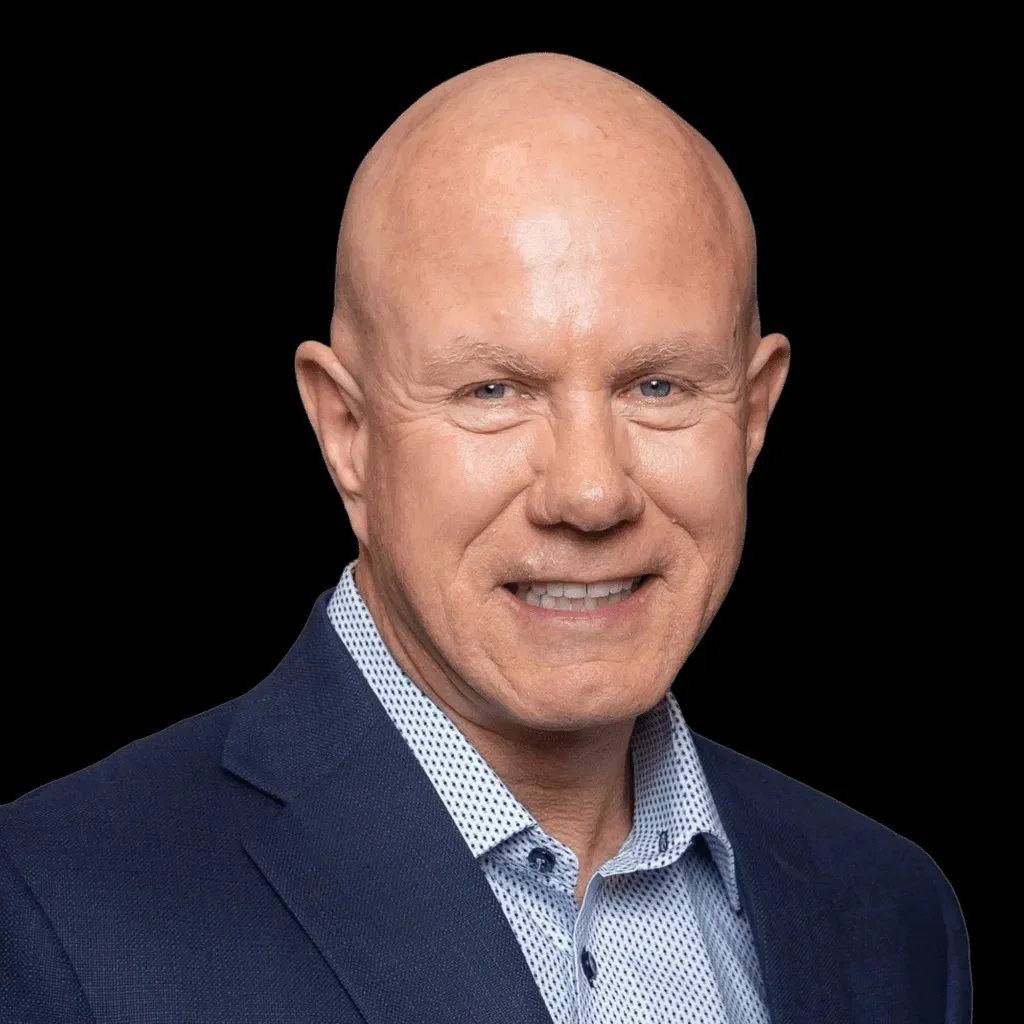
Generosity Keynote Speaker, Ryan Skoog
Ryan Skoog shared how generosity has “upended” his life in the best ways, describing it as an adventure where what you give becomes a seed that multiplies. He connected generosity to Jesus’ teaching about the “good eye” and “bad eye,” explaining that in Jesus’ day a “good eye” meant being generous and a “bad eye” meant being stingy—so generosity brings light and life, while withholding shrinks your world. He emphasized that generosity flows from gratitude: when you stop focusing on what you don’t have and start noticing how blessed you are, it becomes easier to live open-handedly.
Ryan then made it very practical for leaders and business owners. His family’s travel businesses helped fund their nonprofit, Venture, which serves “unsafe, unreached, and unresourced” places, and he explained that the rarest kind of giving is not to “look good” or “feel good,” but to “do good” (often through unglamorous but high-impact support). He shared how their company changed when they connected their work to tangible giving (like “buy a ticket, give a meal”) so employees experienced meaningful labor, and he offered a simple framework: connect it, communicate it, and celebrate it—so customers and employees can say, “By choosing this / working here, I’m part of real good.”
Quotes:
“When you give, you’re planting seeds that multiply. When you keep something, it kind of dies with you—but when you give it away, it takes on a life of its own. Generosity has this compounding effect that changes you and the world around you.”
“If you’re constantly looking at what you don’t have, it’s very hard to be generous. But when you start looking at how blessed you are—three meals a day, breath in your lungs, opportunities in front of you—that gratitude becomes a platform for generosity. Your perspective determines your posture.”
“If you don’t connect what you’re doing to something deeper and more meaningful, you’re missing one of the top drivers of human flourishing. People long for meaningful labor. When employees can say, ‘By working here, I’m actually part of real good,’ it transforms culture.”
“At the end of your life, you won’t be thinking about how big your company was. You’ll be thinking about the people you helped. Generosity shifts your focus from building something impressive to building something impactful.”
Resources:
Check out Ryan Skoog’s Business website here.
Listen to Ryan’s Keynote here.

Generosity Case Study, Elizabeth Brickman
Elizabeth emphasized that Christians should not shrink back financially, because if godly people refuse to build wealth, kingdom work will go unfunded. She challenged believers to become strong earners, investors, and givers with dreams surrendered to Christ, recognizing that some ambitions may actually be part of God’s larger strategy. While affirming that saving is wise, she made clear that saving alone does not expand impact—generosity does. Through her personal story of repaying a $90,000 obligation while newly married and with a negative net worth, she showed that generosity is not something you wait to begin once you “have enough,” but a decision you make now—often sacrificially—which can unleash unexpected provision and a much larger life.
Resources:
Check out Elizabeth’s Website here.
Listen to Elizabeth’s Case Study here.

Ministry Highlight, Nicole Escobar of Trees of Hope
Nicole Escobar shared about Trees of Hope, a ministry dedicated to preventing sexual abuse and walking survivors through Christ-centered healing. Drawing from her own experience of childhood sexual abuse, she explained how unaddressed trauma silently affects leadership, relationships, parenting, and identity, even when someone appears successful outwardly. Trees of Hope creates confidential healing spaces and equips families, churches, and organizations with prevention education, addressing a crisis that impacts one in three girls and one in six boys before age eighteen. Nicole emphasized that healing does not erase the past but breaks its grip, and that when leaders choose healing, freedom ripples outward into families, teams, and entire communities.
Resources:
Check out Trees of Hope’s website here.

Humility Keynote Speaker, Holly Moore
Holly Moore’s keynote reframed humility as a practical leadership advantage, not a “soft” virtue. She argued that humility is both an attitude and a behavior that can coexist with high accountability and achievement—and that it’s often the differentiator between ordinary success and lasting impact. Her working definition of humility had three parts: a posture of self-forgetfulness (being others-focused without performative “humble bragging”), a willingness to recognize and admit fault, and a posture of continual learning expressed through specific, consistent gratitude. She illustrated this personally through caring for her mother: even when her intentions were loving, her impatience communicated shame—showing why leaders must “hold up a mirror” and consider what it feels like to be on the other side of them.
From there, she gave four actionable practices to build humble cultures: refuse defensiveness, express gratitude, choose curiosity over being easily offended, and communicate authentically—especially when emotional reactions feel out of proportion. She used examples like Netflix’s Reed Hastings learning to “farm for dissent” so leaders don’t silence honest feedback, and Campbell’s Soup CEO Doug Conant’s practice of writing tens of thousands of handwritten thank-you notes to rebuild engagement. Her point was simple: when leaders do the inner work (noticing fear, insecurity, the need to prove themselves), they create teams where truth is safe, gratitude is felt, and people experience both warmth and excellence.
Quotes:
“I believe that humility is both an attitude and a behavior. An attitude is how I think and feel about something; a behavior is the action I choose to take. So when we think about humility, we’ve got to ask: what’s my attitude—and how is it shaping what I do?”
“What would happen on your teams if you chose to be curious rather than easily offended? Instead of assuming the worst, you pause and ask, ‘What’s going on here?’ Curiosity keeps you from throwing people under the bus and helps you stay humble.”
“When I have an emotional overreaction to something someone has said—so out of proportion to what was said—that’s a time to call time out and figure something out. That reaction is telling me something about a hurt in my heart. Communicating authentically in moments like that is one of the ways we practice humility.”
Resources:
Check out Holly’s Website here.
Listen to Holly Moore’s keynote here.

Humility Case Study, Scott Sullivan
Scott Sullivan grew up in a two-parent home that stayed together, but it was marked by alcohol abuse and physical/emotional abuse—shaping both strengths (hard work, truth-telling, persistence) and later struggles like pride, anger, control, and manipulation. His career skyrocketed from GE audits to becoming a Fortune 500 CFO at 33, and with the pressure of quarterly earnings and an owner facing escalating margin calls, he chose to “adjust” earnings—intending to reverse it later—until it snowballed, was discovered, and led to WorldCom’s collapse, legal consequences, and ultimately a five-year prison sentence.
In prison, Scott says God met him in a turning point: he surrendered his life to Jesus on his knees outside the chapel in April 2006, and humility became the lesson he learned “the hard way.” He describes redemption through his wife Carla’s faith and perseverance through his incarceration, their slow reconciliation afterward, and later profound grief when their 13-year-old daughter Christina died after a medical crisis in 2014—yet he closes by emphasizing that God is still a redeeming God, and asks for prayer over their children and grandchildren.
Resources:
Listen to Scott’s case study here.

Mark your calendar for our next class:
Integrity
When: Thursday, March 12
Speaker: Bill Yeargin
Time: 11:30am - 4:30pm (Lunch provided)
Location: Boca Raton Community Church
(601 NW 4th Avenue Boca Raton FL 33432)
Gift Card Challenge: Don’t forget to bless someone with your $25 Publix Gift Card. Tell us your generosity story here.
Reading assignment: The Four Obsessions of an Extraordinary Executive by Patrick Lencioni. Check out the book questions here.
Upcoming Events:
Power Lunches:
Next dates are:
Monday, March 16 | Entrepreneurship with Purpose
12:00–1:30 PM
Location: The Fort
701 N Fort Lauderdale Beach Blvd,
Fort Lauderdale, FL 33304
Host: Jeff Roschman
Tuesday, April 21 | Marketing that Moves People
12:00–1:30 PM
Location: Brandstar
800 E Atlantic Blvd,
Pompano Beach, FL 33060
Host: Mark Alfieri
Pickleball Tournament - Saturday, March 21 from 1:30 - 5pm:
Join us for an afternoon of fellowship, fun, and friendly competition at the Second Annual NCFSF Invitational!
This tournament brings together the Lifework Leadership, Convene, and NCF South Florida communities for an exciting afternoon on the courts.
Whether you're a seasoned player or brand new to the game, this event is designed for all skill levels, with professional coaches on-site to guide and assist. Register here.